Slider Image
Slider Thumb

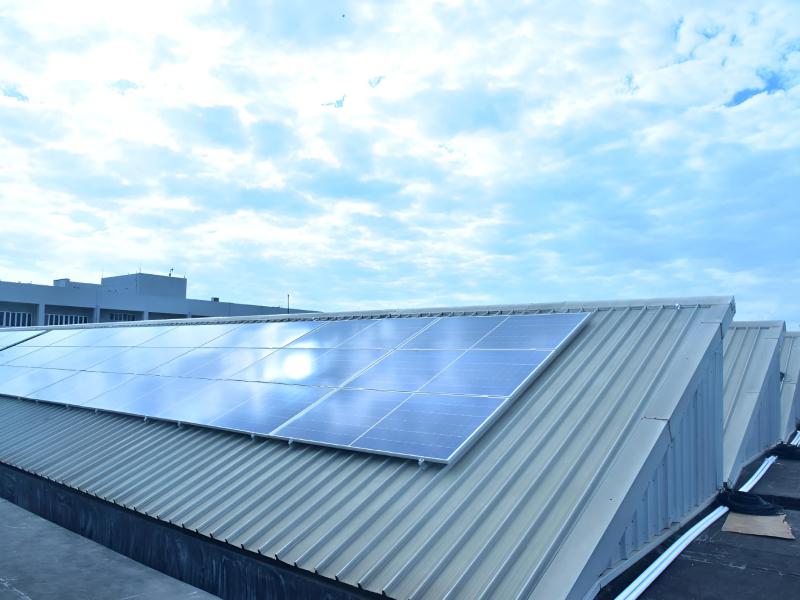
On-Grid Solar System connects solar panels directly to the utility grid, allowing excess energy to be fed back. It provides reliable, eco-friendly power, reduces electricity bills, and is ideal for residential and commercial applications.

An On-Grid Solar System, also known as a Grid-Connected or Net Metering System, allows solar panels to supply electricity directly to the utility grid. It records both the energy imported from the grid and the excess solar energy exported back, billing only for the net consumption. The system uses monocrystalline or polycrystalline panels with a grid-tied inverter, offering reliable and eco-friendly power for residential, commercial, and industrial applications. It features forward and reverse power flow, safety protections such as anti-islanding, over-voltage, and over-current safeguards, and optional remote monitoring. With net metering, excess energy supplied to the grid is credited by the utility, making it an efficient solution for reducing electricity costs while complying with local regulations.

Cash,Cheque,Demand Draft

Key Attributes
  • System Type On-Grid / Grid-Connected / Net Metering
  • Capacity 1 kW – 100 kW+ (depending on installation requirement)
  • Inverter Type Grid-Tied Solar Inverter
  • Metering Net Metering – import/export energy recorded separately
  • Input Voltage Range (Solar Panels) 150 – 600 V DC (depending on inverter)
  • Output Voltage (AC) 230 V / 415 V AC, 50 Hz
  • Max Efficiency (Inverter) 96–98%
  • Operating Temperature -10°C to 60°C
  • Solar Panels 1 – Mono / 2 – Polycrystalline
Slider Image
Slider Thumb

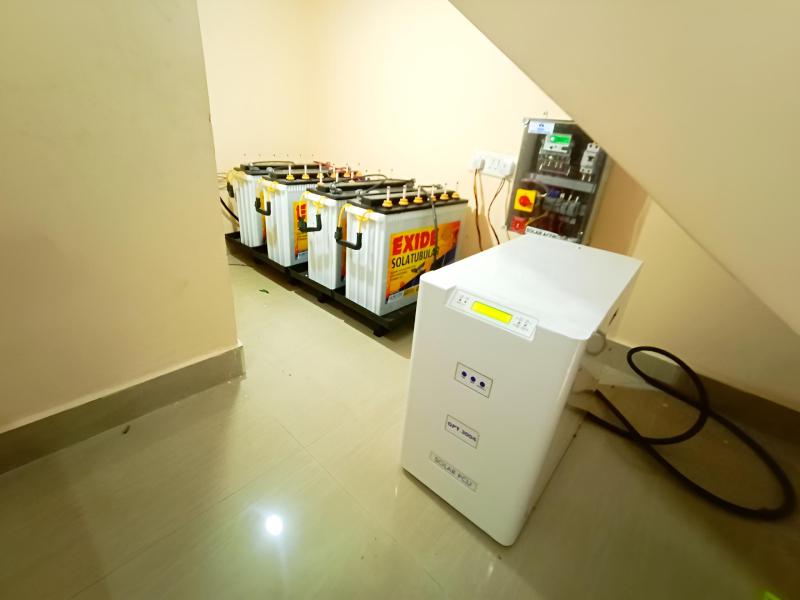
Off-Grid Solar System with battery backup delivers reliable, independent power for rural homes, farms, and remote sites. Cost-effective, eco-friendly, and ensures 24/7 electricity supply

An Off-Grid Solar System, also known as a Stand-Alone Solar Power System, is designed to generate electricity from solar panels and store it in batteries for use during the night, cloudy weather, or when there is a power outage from the grid. Unlike On-Grid systems, it operates independently and ensures continuous power supply even in remote areas where grid electricity is unavailable or unreliable. The system includes solar panels, a battery bank, an off-grid inverter, and a charge controller, all configured based on available installation area, required backup hours, and load demand. When batteries are fully charged, excess solar power directly runs household or facility loads, reducing grid dependency. With features such as high efficiency, reliable battery storage, and load management, Off-Grid Solar Systems provide a sustainable, cost-effective, and uninterrupted power solution for residential, commercial, and industrial applications

Cash,Cheque,Demand Draft

Key Attributes
  • Product Type Off-Grid Solar Power System
  • Power Source Solar with Battery Backup
  • Battery Type Lithium-ion / Lead-acid (as required)
  • Capacity Range 1 kW – 100 kW (customizable)
  • Output Supply 24/7 Independent Power
  • Maintenance Low maintenance, long lifespan
  • Installation Rooftop / Ground-mounted compatible
  • System Lifespan 10–15 years (average)
  • Eco Benefit Reduces fuel cost & carbon footprint
  • Efficiency 85% – 95% (depending on system design)
Slider Image
Slider Thumb

Hybrid Solar System combines solar panels, inverter, and battery backup to deliver continuous power. It stores excess energy, uses grid supply when needed, and ensures efficiency, reliability, and reduced electricity costs.

A Hybrid Solar Power System is an advanced energy solution that integrates solar panels, batteries, and the utility grid to deliver continuous, efficient, and cost-effective electricity. It primarily generates power from solar energy, stores excess in batteries for use during outages or nighttime, and draws from the grid when solar or stored energy is insufficient, ensuring uninterrupted supply at all times. By intelligently balancing solar, battery, and grid usage, the system reduces electricity costs, provides reliable backup, and minimizes dependence on conventional energy sources. Scalable from small homes to large industrial setups, hybrid systems are ideal for those seeking energy independence, operational efficiency, and long-term sustainability.

Cash,Cheque,Demand Draft

Key Attributes
  • System Type Hybrid Solar Power System
  • Power Output Range 1 kW – 100 kW
  • Battery Backup 4 – 12 hours (customizable)
  • Inverter Efficiency 95% – 98%
  • Solar Panel Efficiency 18% – 21%
  • Energy Source Solar + Grid + Battery
  • Battery Type Lithium-ion / Lead-acid (selectable)
  • Charge Controller MPPT / PWM (depending on system)
  • Operating Voltage 48V – 400V (depending on system size)
  • Monitoring Smart monitoring with real-time performance data
Slider Image
Slider Thumb

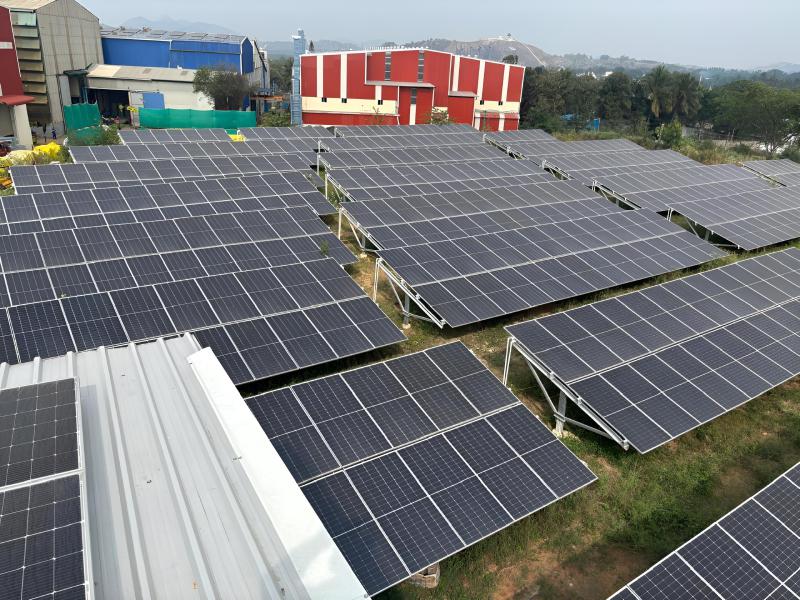
A ground-mount solar system is installed directly on the ground using strong support structures instead of rooftops. It is ideal for large open spaces and provides flexibility in orientation, tilt, and scalability for maximum energy generation.

Ground-Mount Solar Systems provide a reliable solution for installing solar panels on open land where roof space is limited. Built with strong steel or aluminum structures and supported by concrete or pile foundations, they ensure durability and stability in all weather conditions. These systems allow flexible tilt and orientation adjustments for maximum sunlight capture, with options for fixed or tracking designs. Suitable for residential, commercial, agricultural, and large utility-scale projects, ground-mounted solar offers scalability, ease of maintenance, and long-term energy efficiency, making it a preferred choice for sustainable power generation.

Key Attributes
  • Structure Height 0.5 m – 3 m above ground (customizable)
  • Tilt Angle Adjustable between 10° – 45° (site-specific)
  • Orientation South-facing (Northern Hemisphere) or North-facing (Southern Hemisphere)
  • Material Thickness Steel sections 2 mm – 5 mm, Aluminum sections 1.5 mm – 3 mm
  • Foundation Depth 1 m – 2 m (pile-driven or RCC footing)
  • Wind Load Capacity Up to 180 km/h (as per site design)
  • Snow Load Capacity 0.5 kN/m² – 1.5 kN/m² (customizable)
  • System Capacity 1 kW to 100 MW (scalable)
  • Design Life 25+ years (matching solar panel lifespan)
  • Installation Time 5 – 7 days per 100 kW system (average)
  • Warranty 10–15 years on structure (typical manufacturer coverage)